
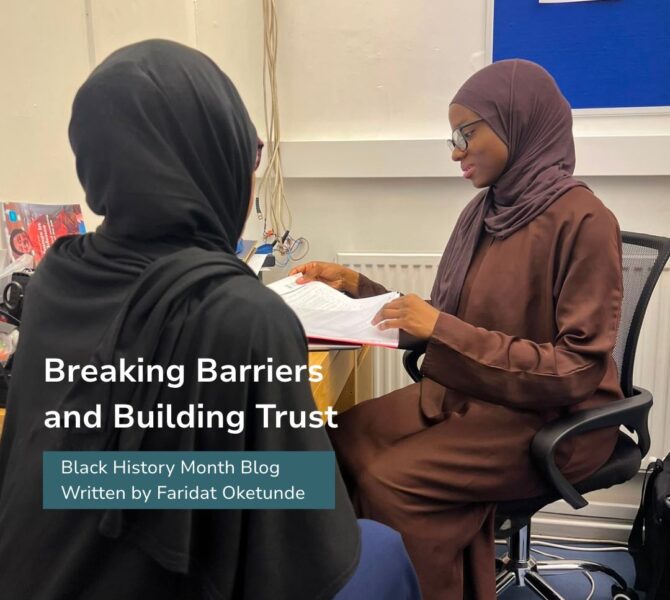
This Black History Month, I wanted to take some time to reflect on my journey as a young Black Muslim woman, working in the debt advice sector at Rooted Finance. Specifically, how my background shapes my perspective on financial health, and what it means to navigate spaces where professionals who look like me are often few and far between.
Growing up in London, within a Nigerian household, has shaped my understanding of community, identity, and the importance of representation. My law degree first made me aware of barriers in access, and when I volunteered at Citizens Advice, I realised the profound impact that professional advice can have in breaking down those barriers.
Working in the Advice Sector can sometimes mean being one of the few Black professionals in the room. However, navigating spaces alongside other Black professionals gives me the confidence to step into rooms carrying both my background and the stereotypes associated with it.
When I meet clients from a shared background, that representation changes the dynamic entirely. I am able to adjust my tone to adapt to them and make them feel more at ease. I try to make sure I am not being condescending; I can code-switch slightly, much like how I do with my elders, which builds trust and a willingness to share information. Because financial stigma runs deep within my community, seeing professionals from the same background feels reassuring.

The Human Side of Debt: Trust and Cultural Competence
Debt and financial issues carry an intense stigma, and historical mistrust of traditional financial institutions exists in many Black communities. Building trust starts from not making any pre-assumptions or prejudgments.
I can usually tell from body language or tone that people already feel judged or embarrassed. I try to make it clear that my role is not to judge their circumstances, but to help. Cultural competence is vital to fully understand people’s unique experiences and it’s important to be willing to ask different and appropriate questions.
What surprised me most when I entered the sector was learning about the “ethnicity premium” through the Equity Finance project, led by Rooted Finance. The majority of my clients are from an ethnic background and speak of similar experiences and patterns in their treatment from the financial sector. This explains why sometimes people seek family advice – before professionals, – because of a mistrust in institutions that got them into debt in the first place.
Community Support Networks
In connection with the Black History Month’s focus on community impact, it’s fundamental to highlight those informal financial practices—such as community savings circles or intergenerational family support—that intersect deeply with modern formal debt advice. Informal support networks can be life saving; as many people may feel more comfortable approaching family before a formal debt institution.
At the same time, family support can affect financial circumstances, as someone may be supporting multiple generations of families while juggling their own finances. That is where formal debt advice comes in: we can assess the full circumstances and help take some of the load off and safeguard essential needs. For me, it is not about replacing the support people have in their communities; it is about making professional advice accessible enough that people feel comfortable using it alongside that support.
Empowering the Next Generation
As someone fairly new to the sector, one thing I would tell young people is to take an interest in learning about your finances early on. Understanding buzzwords like credit, interest, types of bills, and what you are actually committing to when you borrow can make a big difference.
Since working in Debt Advice, I have learned how quickly circumstances can change for clients, often beyond your control. Debt shouldn’t be seen as a reflection of irresponsibility or personal character because there are so many external factors that play a part. Sometimes, my age makes people feel that I need to prove my level of knowledge, but being young gives us a different view – especially growing up through the cost-of-living crisis, which forces us to acquire more knowledge.
To young Black women entering a professional environment:
I think it’s important to know that you don’t necessarily need to have everything figured out before you start. I came into the advice sector from a legal background, and a lot of my debt advice knowledge has come through training, experience, and learning from the people around me along the way. That support is so important – having people willing to teach you, gives you opportunities, and allows you to develop your confidence.
Creating new opportunities in training and mentoring can help more young Black women not only enter the sector but build a longstanding career within it.

Author bio: Faridat Oketunde is a Trainee Debt Advisor at Rooted Finance. Faridat is a law graduate and previously volunteered at Citizens Advice.